Writing Across the Curriculum
The Writing Program has a long history of supporting faculty who are teaching writing through resources, workshops, brown bag conversations, Writing Across the Curriculum (WAC) learning opportunities, pedagogical consultations, and Writing Center support.
-
Dr. Antonio Byrd, Assc. Professor of English, Univ of Missouri-Kansas City & Co-Chair, MLA Task Force on GenAI Initiatives
Antonio Byrd (he/they) teaches courses in Black literacies, professional and technical communication, multimodal writing, and composition pedagogy. His research focuses on how the legacies of using literacy for liberation carry forward into present day Black digital literacies and media features. Antonio serves as co-chair for MLA Task Force on Generative AI Initiatives Standing and is a member of the CCCC Special Committee on GenAI. His work has appeared in College Composition and Communication, Literacy in Composition Studies, Technical Communication Quarterly, and Writer: Craft and Context. In 2025, Dr. Byrd published his first book manuscript, Black Tech Ecosystems: How Black Adult Learners Use Computer Code Bootcamps for Liberation with The WAC Clearinghouse.
-
Dr. Jennifer Sano-Franchini, Gaziano Family Legacy Professor & Assc. Professor of English, West Virginia University
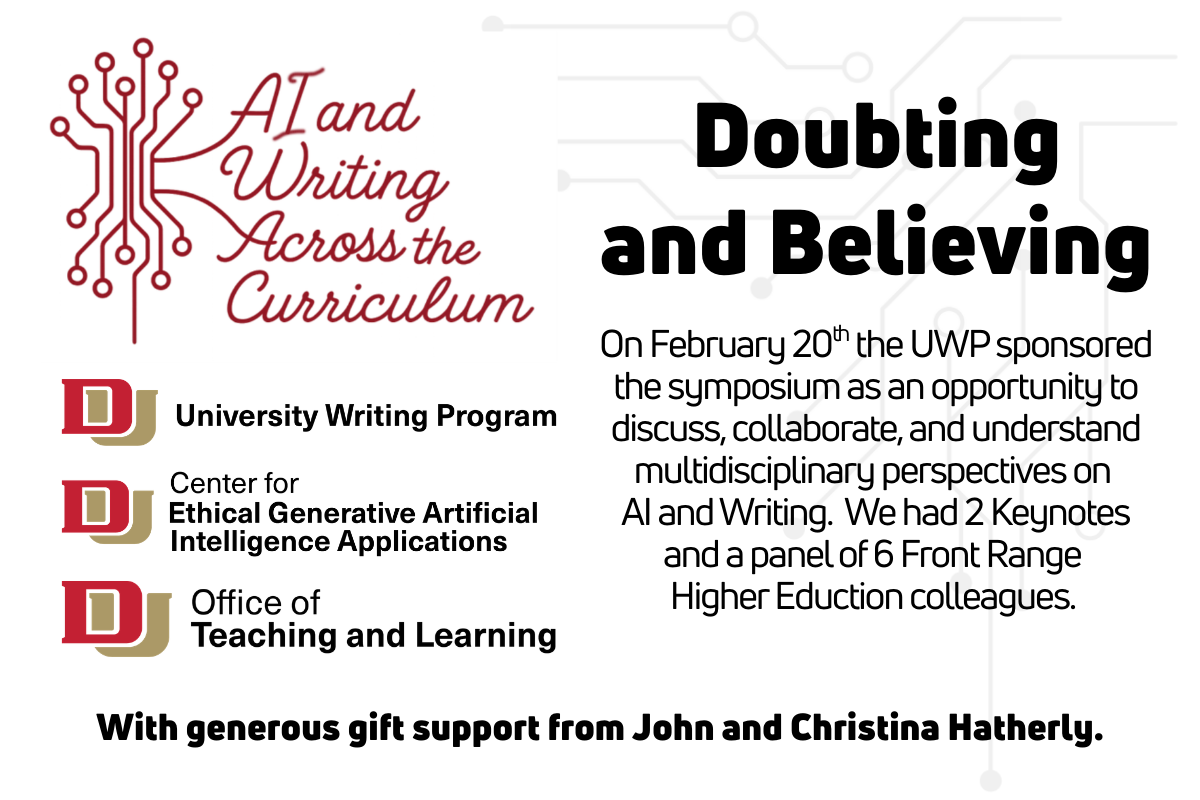
Doubting, Believing, Refusing. Unpacking Interpretative Frameworks for Making Sense of Generative AI in WAC
Jennifer Sano-Franchini (she, her) is the Gaziano Family Legacy Professor of Rhetoric and Writing Studies and an associate professor of English at West Virginia University. Her research and teaching interests are in the cultural politics of technology design, Asian American rhetoric, and the rhetorical work of institutions. She is a co-creator of Refusing Generative AI in Writing Studies with Maggie Fernandes and Megan McIntyre. She also serves as Immediate Past Chair of the Conference on College Composition and Communication and Co-Chair of the CCCC Special Committee on Generative AI in College Composition and Writing Studies.
List of Resources
Writing Accountability Groups
A partnership between the Writing Program and the Office of Faculty Affairs, the Writing Accountability program hosts small, facilitated groups to support faculty research and work-life balance year-long. Drawing on NCFDD and DU professional development resources, participants meet weekly to identify and support advancement of individual projects. Rather than exchanging manuscripts or reviewing content, however, group conversations focus on the process of writing.
Contact Megan Kelly to learn more about faculty Writing Accountability Groups and writing retreats
Writing Across the Curriculum (WAC)
If you are interested in conversations about WAC or in setting up a 45-minute conversation with a writing faculty member, please email our University Writing Program Manager, Amanda Thompson.
Writing Center Support
Faculty can support their student writers with the help of the Writing Center, which not only offers individual and small-group consultations all undergraduate and graduate students but also can visit your class to talk with students about how to make the most of their Writing Center visits, present briefly on effective writing practices, arrange peer reviews, and offer resources. The Writing Center can also arrange individual consultations with you and a writing faculty member to talk about your teaching of writing.
Learn MorePoster Printing
Preparing your class for a presentation and looking to have posters made?
The Writing Program & Writing Center can offer your student group support for effective research poster design, including live and recorded workshops and resources.
We also offer poster printing to DU students, faculty, and staff for research and academic presentations for a nominal fee.
Learn More...Statement on Generative AI and Writing
It is the University Writing Program’s position that genAI is a powerful and productive development in the long history of literacy technologies, and that the teaching of writing should include methods of integration and collaboration with these technologies while also interrogating the rhetorical and ethical dimensions of genAI.
Learn More