Legislative Organizing Mapping: Lessons from Juntos Community for the WDC
Author: Reina Ortiz, Public Policy Scholar, University of Denver; Community Partners: Maya Wheeler, Executive Director, WDC; Juntos Community
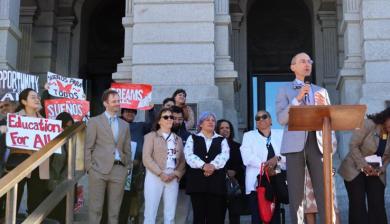
Community-centered advocacy is most effective when the people most impacted by an issue are actively involved in shaping solutions. This principle guided my project, Legislative Organizing Mapping: Lessons from the Safety Not Status Initiative, conducted in partnershipwith WDC and Juntos Community.
The project explored a central question: How do community organizations build sustained, trust-based relationships with vulnerable populations in order to foster meaningful and ongoing participation in legislative advocacy? To answer this question, I examined the organizing strategies used by Juntos Community during their advocacy efforts surrounding Colorado's "Safety Not Status" legislation. The bill seeks to reduce barriers faced by immigrant and undocumented students by allowing certain institutions to accept Individual Taxpayer Identification Numbers (ITINs) in place of Social Security numbers for unpaid educational opportunities.
Using a scholarship of integration approach, I combined insights from community interviews, observations of steering committee meetings, legislative tracking, and existing research on community engagement. Through this process, I documented how Juntos intentionally centers the voices and experiences of directly impacted community members throughout policy development and advocacy efforts. One of the project's most significant accomplishments was the creation of a report for WDC that identifies practical strategies for building authentic community partnerships. The research revealed several key practices that contributed to strong participation and trust. These included compensating community members for their time through stipends, providing transportation and meals for in-person events, offering language-accessible programming, and creating multiple pathways for participation. Rather than limiting participants to a single role, Juntos integrated community members throughout the advocacy process, encouraging long-term engagement and shared ownership of outcomes.
Interviews also highlighted the importance of transparency and mutual reciprocity. Participants emphasized that honest communication, realistic expectations, and meaningful opportunities for involvement helped build trust and foster a sense of belonging. By recognizing community members as equal partners rather than simply recipients of services, organizations can create more sustainable and effective advocacy efforts.
The project generated tangible benefits for both WDC and the broader community. The final report provides a practical framework that WDC staff, interns, and future advocates can use to strengthen their own community engagement practices. These findings offer actionable recommendations for increasing participation among historically underserved populations while ensuring that advocacy efforts remain inclusive and responsive to community needs.The successful advancement of the Safety Not Status legislation also demonstrated the power of community-driven policymaking. Through intentional relationship-building and sustained engagement, directly impacted individuals were able to play an active role in shaping policy that affects their lives.
This experience strengthened my understanding of public policy, community engagement, and legislative advocacy. Most importantly, it reinforced the idea that lasting policy change is built on trust, inclusion, and meaningful collaboration. By investing in authentic relationships and creating accessible opportunities for participation, organizations can help ensure that community voices remain at the center of decision-making processes.