Learning to Build and Recruit for a Home Healthcare Cooperative
By Zoe Hansen, undergraduate in International Studies and Public Policy
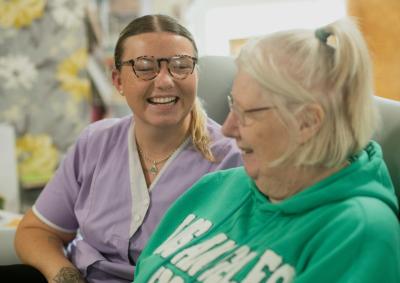
This project was designed to help home healthcare workers, specifically focused on Certified Nursing Assistants(CNAs), improve theory of working environment and economic power. One way to do that is through the creation of a cooperative(co-op), which will give home healthcare workers a voice in how their job operates. The Wezesha Dada Center(WDC) is a great community partner for this project, having a mission of helping gain the opportunity to control their own career and other successes. Improving the power and voice for CNA’s is incredibly important, especially with CNA’s having high turnover rates. This is a large issue, but this project was focused on what the recruitment challenges may be for a home healthcare co-op, specifically for CNAs.
For this project I worked mostly on the scholarship of integration. In order to build a co-op, there needs to be effective recruitment. This can face a number of challenges that should be understood to better improve recruitment strategies. I worked on this through looking at numerous different data points and any other information available to better understand these challenges. This involved looking at data points that were less applicable and using them to improve knowledge on the current recruitment knowledge. Using this information also helps WDC use the resources and strategies they already have more effectively, improving the recruitment for a home healthcare co-op.
As a result of this project, WDC has a greater understanding of the obstacles and other additional information for recruiting for a home healthcare co-op. This has helped decide that WDC is aligned with the goals of a home healthcare co-op, and capable of managing the recruitment for such a co-op. This leaves WDC better prepared for some of the next steps for building a strong and empowered home healthcare co-op. Throughout this project, it became more apparent that CNAs are struggling and that in spite of the difficulties in recruiting for a home healthcare co-op, it could greatly benefit the people who are struggling with their work as CNAs now. After looking at this different data, it was all summarized and reported back to WDC.
There is still plenty of work ahead to make the vision of a strong and impactful home healthcare co-op a reality, but this project has helped provide some of the important knowledge and steps to recruit for a co-op, keeping the emphasis on who a co-op serves and what makes it strong. This is only one step, but it has helped create a more effective and productive path forward. This has helped me develop as a scholar, creating a better understanding of the work and difficulties that can emerge from creating change, whether it is a big or small step. As I move forward, I hope to continue to focus on the people that work like this and aim to help, always focusing on each step forward, knowledge gained, and improvement.