Establishing a collaborative mentoring relationship between STEM interested high school and college students – cultivating leadership and success.
By Barbekka Hurt
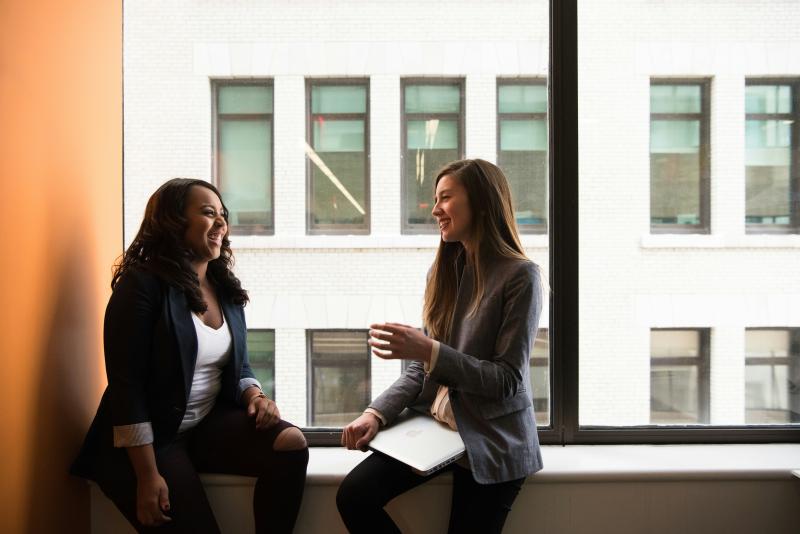
Photo by Christina via Unsplash
This mini-grant during Fall 2020 provided the opportunity to collaboratively create a new STEM Mentoring Internship between Westminster High School (WHS) in Adams County, CO and the University of Denver (DU). It was developed and implemented by DU Biological Sciences faculty Dr. Barbekka Hurtt and WHS faculty Mr. Scott Troy, along with incredibly valuable support from Dr. Nicole Sjoblom of Upward Bound Math Science at Boston University and Fred Martin and Pat Lineberger of WHS.
During the 2020-21 academic year, all students and faculty at both DU and WHS were managing dramatic changes in the educational landscape due to the COVID-19 pandemic and the need for personal connection and support was more evident than ever. Both schools recognized the need for, and importance of, near-peer mentoring to promote success for both high school and college students pursuing STEM interests, particularly those from underserved and underrepresented backgrounds. Near-peer mentoring most commonly pairs together individuals who are close in age but at different stages of experience. The objectives for the WHS students were to support their transition from high school to post-high school (college, or other) endeavors in an informed and supported manner by those who had recently made the transition; the objectives for the DU mentors were to provide an opportunity for mentoring experience and leadership development. Over the course of the 2020-21 academic year, the STEM Mentoring Internship paired twenty-one DU STEM undergraduates with sixty-four WHS seniors enrolled in a year-long biomedical innovations class.
A major challenge of the year was that the mentoring program had to be offered only via Zoom as in-person meetings were unable to be offered. DU student leaders Sophia Kim, Kayla Nocon and Collette Hong helped create and cultivate the mentoring sequence, guiding DU mentors in learning various elements of mentoring and supporting all mentors to the best of their ability. Dr. Nicole Sjoblom’s insight and contributions in developing and summarizing weekly “exit tickets” for both the mentors and mentees was invaluable, as these weekly feedback elements were utilized to inform how this program was going from the students’ point of view. End of quarter assessments for both the DU and WHS students indicated the program was a success, and elements of improvement and growth were also identified. Plans are in place to continue the program into the 2021-22 academic year and build upon the success of this first year.