DUSciTech 2019: Building STEM identification and scientific self-efficacy with girls of color in Denver
By Shannon Murphy, Robin Tinghitella, and Jennifer Hoffman
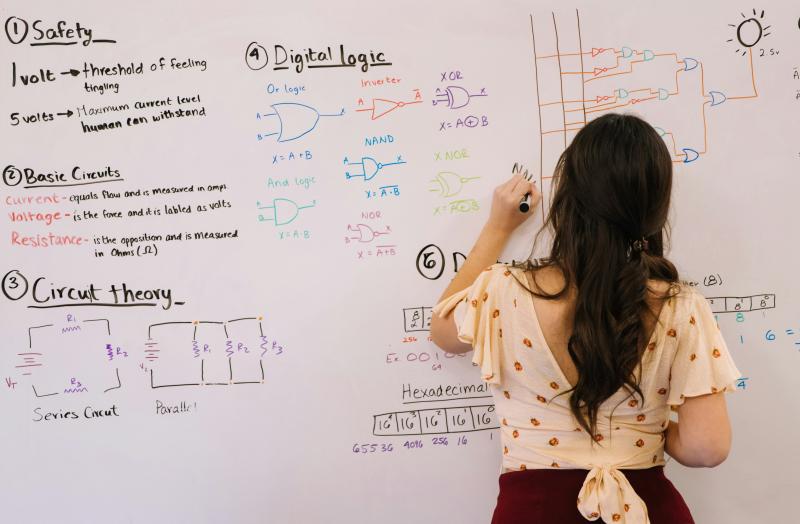
Photo provided by Jeswin Thomas via Unsplash
We are a group of female scientists committed to broadening participation in STEM fields by women of color. In 2016 we developed a summer STEM camp, DU SciTech, for local middle-school girls from low-income and minority backgrounds. CCESL funded the inaugural DU SciTech camp in 2016 and a follow-up camp in 2017. Most recently, we ran the camp with support from a Public Good Bridge grant in summer 2019. The 2019 camp brought 16 girls from diverse backgrounds to DU for a weeklong day camp. The girls participated at no cost to their families, ate breakfast and lunch on campus, and took home all camp materials to keep. Our primary goal was to provide high-quality, hands-on STEM experiences to girls from underrepresented backgrounds, in order to give them opportunities to build their skills and confidence and develop strategies for navigating the challenges of a career in a predominantly white and male STEM workforce. In 2019 we also conducted focused, IRB-approved assessment with the participants (using Qualtrics surveys pre- and post-camp and following key activities).
In 2019, our major community partner was Denver Public Schools (DPS). Our DPS partners benefited in that we provided free high-quality STEM experiences to female DPS students from underrepresented backgrounds. Our project had 3 main goals, each of which we accomplished:
1. Increase participants’ confidence in STEM-related skills. DU SciTech campers gained hands-on experiences in a variety of STEM fields via activities designed to increase their scientific self-efficacy. Activities included 1) constructing and learning to use their own telescopes; 2) building circuits with Play-Doh; 3) collecting and preserving insects with real entomological supplies and techniques; 4) conducting a full inquiry based experiment to test the impacts of light pollution on an invasive plant; and 5) setting up and learning to program their own computers. Our light pollution experiment was a new addition to the camp this year and one that will keep campers engaged with us for some time as Dr. Murphy is leading the production of a peer-reviewed publication based on our results. Campers presented their new knowledge and skills to family members, friends, and DU stakeholders at an end-of-week poster session.
As in 2019, participants took home all camp-related supplies (computers, touchscreens, telescopes, and insect-collecting kits) at the end of the week. This is important because it moves STEM projects from the university classroom and into the participants’ own homes. Several parents reported that their daughters taught siblings and friends how to use their telescopes and insect-collecting kits, revealing their sense of ownership of STEM expertise.
2. Increase participants’ awareness of STEM careers. All the DU SciTech organizers were female science professors, and all the counselors were graduate women pursuing STEM degrees. We also invited several women from DU’s faculty and staff to visit the camp and tell the girls about how they found their STEM careers. We chose these visitors based on their different racial backgrounds and career trajectories. We also invited two external guests to come to campus: planetary scientist Kandi Jessup from the Southwest Research Institute and zookeeper Jordan Schimming from the Denver Zoo. Three researchers at the Denver Museum of Nature and Science contributed to programming on site at the museum: Dr. Frank Krell, Mr. Jeff Stephenson, and Ms. Naomi Pequette (a DU alumna).
3. Mentor participants toward STEM-related college majors or trades. We invited 4 participants from the 2017 camp to act as peer mentors to the 2019 students. These experienced girls guided the new campers through the activities, serving as mentors and role models and solidifying their own scientific identities. In addition, a representative from the DU admissions office visited the camp to speak with participants about college applications and fundin. Finally, we are continuing to work with the 2019 participants on a scientific paper on light pollution in our community and how it affects plants. During the 2019 camp week, participants conducted an experiment investigating the effect of light pollution by streetlights on plant species. We are finalizing an article reporting their results and plan to submit it to the journal Urban Ecosystems in spring 2020; all the participants, peer mentors, and graduate student counselors will be co-authors on this publication. We will also plan other ongoing alumna activities to stay in touch with the 2019 participants and act as mentors as they enter high school.