Documenting the Past, Fostering the Future - Summer Trip 2026
By: Reina Ortiz, 4th Year Public Policy Student Scholar
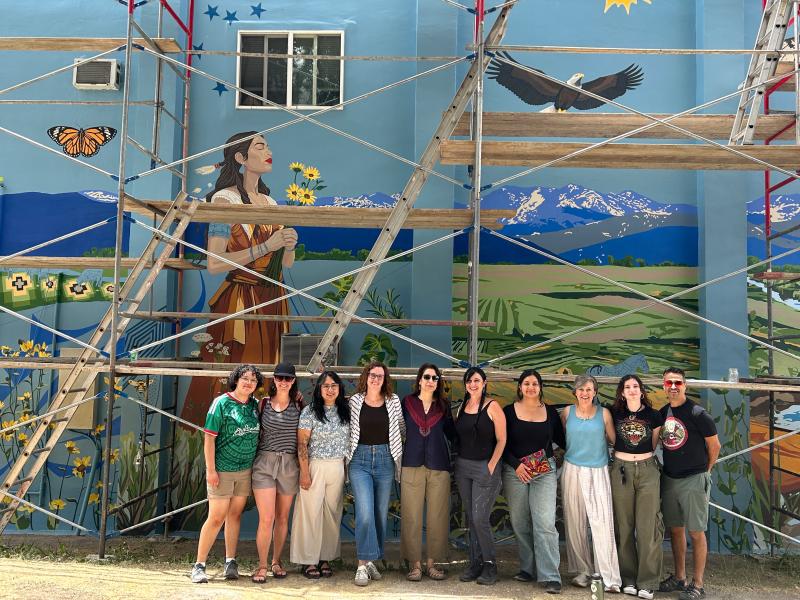
Documenting the Past, Fostering the Future (DPFF) is a research initiative cultivating young leaders as agents and storytellers of racial justice in Colorado and the wider Rocky Mountain West. With university-wide collaboration and support from CCSEL, DPFF has brought together faculty and staff across disciplines, a community scholar, as well as undergraduate, graduate, and Ph.D. students since its launch in 2023.
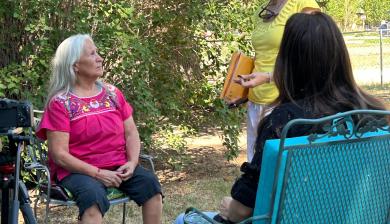
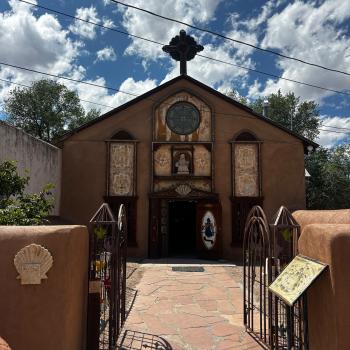
Most recently, DPFF has focused on collecting and preserving oral histories from prominent Chicanx and Native activists throughout New Mexico and southern Colorado. These activists have worked toward land rights, racial equality and representation, and economic revitalization within their communities. A central focus of the research is the role women played during the Chicanx civil rights movement of the 1960s and 70s, as their voices and stories have historically been underrepresented. Through connections made with Community Consultant and Facilitator, Lucha Martinez de Luna, DU faculty and students have traveled over the past two summers to conduct interviews. This summer, the team visited communities where these leaders now reside, including Mora, Chimayo, Taos, Tierra Amarilla, San Luis, Antonito, Fort Garland, and Alamosa
One of the primary histories being illuminated through this research is the long-term fight to restore rights to land and water that had been illegally claimed by developers from the 19th century to the present. After Mexico’s independence in 1848, many colonially designated land grants were honored, including areas in present-day Tierra Amarilla, Archuleta, and Conejos. By 1904, after the United States had seized much of the Southwest from Mexico, only 6% of these land grants had been honored by the U.S. Supreme Court, beginning a prolonged struggle for land restoration among Mexican and Indigenous communities.
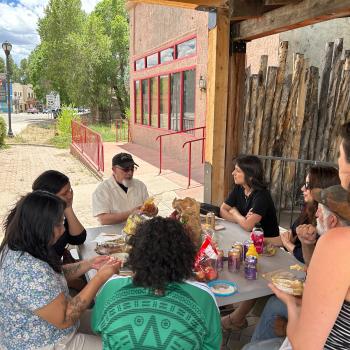
During the most recent trip, seven faculty members and three students visited critical landmarks of this struggle, including a courthouse raided by the Alianza Federal de Mercedes in 1967. The protest brought national attention to land-grant violations throughout the region and helped inspire initiatives to restore communal land grants that continue today.
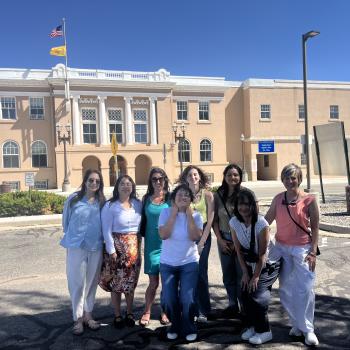
Another important facet of this history is the significant role women occupied during the movement. One of the most illuminating topics discussed in these interviews is the dual struggle women faced against both patriarchal norms and colonial land acquisition. The team has interviewed women whose roles have included investigative journalism, legal support, international diplomacy/delegations, education, rehabilitation efforts, muralism, and protest organizing, often holding multiple positions simultaneously and traveling across state lines to coordinate activism and build networks. The team has met with veteran organizers as well as contemporary leaders who continue Chicanx and Indigenous cultural preservation.
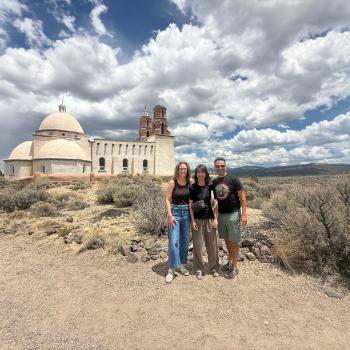
As a person who’s long been interested in public policy, I was inspired to see people who didn’t work in traditional public service, but were nonetheless incredibly engaged in a long-term struggle to improve the lives of those in their communities. I learned about a clinic that was started by women in a rural community, and a commercial venture with textiles that was supported by an economic development grant and supported farmers. These projects show the various ways in which women have and continue to uplift their communities through courageous
leadership and innovation