Building Grant Readiness for Neighborhood Climate Action
By Ali Ayoub, CCESL Changemaker Intern and Undergraduate Student, Business Information & Analytics and International Studies, University of Denver
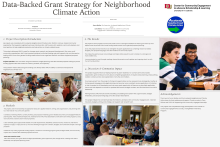
Accelerate Neighborhood Climate Action (ANCA) works with Denver-area residents, neighborhood leaders, and community partners to support practical climate action at the local level. Through my CCESL Changemaker Internship, my project focused on helping ANCA strengthen its grant readiness, proposal planning, and funding strategy so the organization can continue building community-led climate resilience. The main goal of the project was to help ANCA move from broad funding needs toward clearer, more organized, and more data-backed proposal development. Like many small community-based organizations, ANCA has strong programs and meaningful community relationships, but limited staff capacity for grant research, document organization, and repeated proposal writing. My work focused on creating systems that could make future grant applications easier to prepare and more consistent across opportunities.
To begin, I reviewed ANCA’s existing priorities, past proposal materials, sponsorship documents, budget and milestone files, meeting notes, and current funding opportunities. I looked for patterns in how ANCA describes its mission, programs, community impact, and funding needs. I also researched grant opportunities based on eligibility, deadlines, award amounts, mission fit, and ANCA’s realistic capacity to apply. A major accomplishment of the project was creating several organized work systems for future use. I helped develop a grant-readiness folder for a climate resilience mini-grant opportunity, including draft proposal language, budget-planning materials, source references, and an attachment checklist. I also created reusable grant boilerplate language that ANCA can adapt for future applications, including organization descriptions, program summaries, community-need language, possible outcomes, metrics, and budget categories.
In addition, I helped organize a funding opportunities triage system so ANCA can compare potential grants more strategically. Rather than treating every funding opportunity equally, this system helps sort opportunities by fit, urgency, funding amount, and next steps. I also supported planning for follow-up outreach with neighborhoods that have previously participated in Climate Action Forums, including draft outreach language and a tracker for future contact. The tangible benefit to the community is that ANCA now has a stronger foundation for pursuing funding that supports neighborhood-level climate action. Better grant organization can help ANCA spend less time recreating language from scratch and more time focusing on communitypriorities. Stronger proposal materials can also improve ANCA’s ability to communicate why its work matters, what outcomes it hopes to achieve, and how funding can support residents directly.
This project also helps ANCA prepare for future community engagement. By organizing past materials, identifying missing pieces, and building reusable systems, the project supports future work such as neighborhood climate forums, youth and community resilience projects, donor communication, and partner reporting.
For me, this internship connected my academic background in Business Information & Analytics and International Studies with real community-based work. I learned that grant strategy is not only about writing. It also requires organizing information, understanding funder priorities, building realistic budgets, and translating community goals into clear, credible plans.